
 Home


October 30, 2026, Buenos Aires, Argentina.
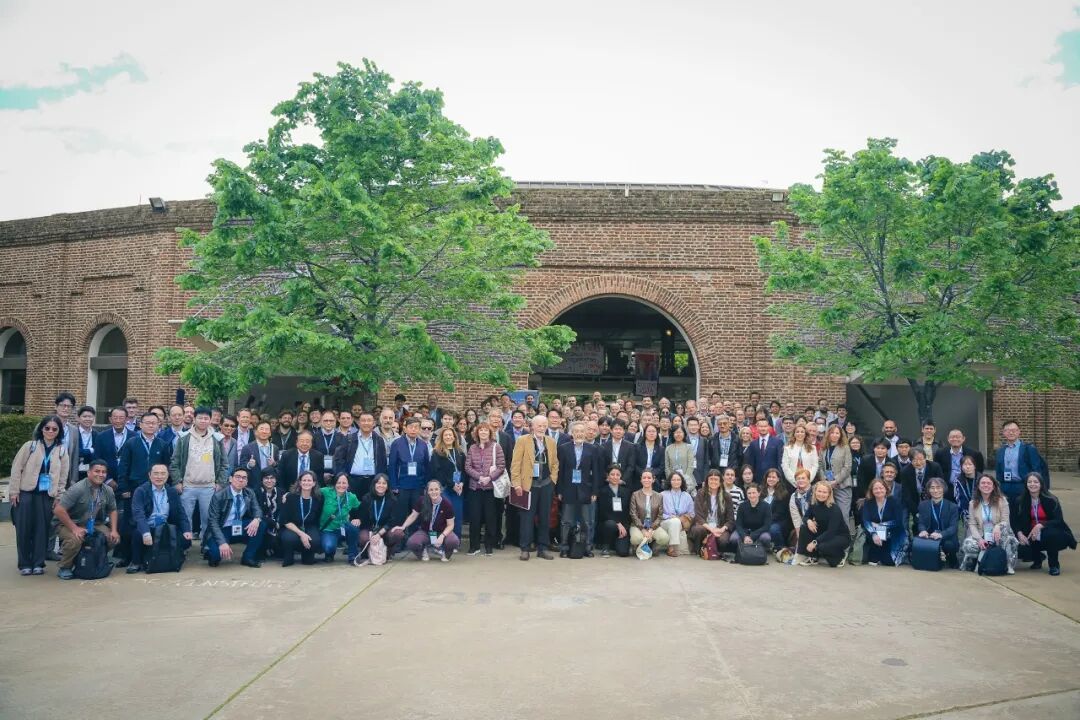
At the closing ceremony of the 21st International Congress on Neutron Capture Therapy (ICNCT-21), a message traveled back from the Southern Hemisphere to China:
The next ICNCT will be held in China, in 2028.
Professor Chen Hesheng, Academician of the Chinese Academy of Sciences, will serve as the next Congress Chair.
1. What Is BNCT, and Why Does It Matter?
If this is your first time hearing about Boron Neutron Capture Therapy (BNCT), think of it as a form of "precision-targeted bombing" for cancer.
It works in two steps:
First, the patient receives an infusion of a boron-containing drug — e.g. boronophenylalanine (BPA). This drug has a remarkable property: it selectively accumulates in tumor cells, while healthy tissue takes up very little.
Second, the tumor is irradiated with a low-energy epithermal neutron beam. When a boron-10 nucleus captures a neutron, it undergoes fission, releasing two short-range particles (an alpha particle and a lithium-7 particle). These particles travel only about one cell diameter.
The higher the tumor-to-normal tissue (T/N) ratio — the boron concentration in tumor tissue versus normal tissue — the more the drug accumulates in the tumor and the less it lingers in healthy tissue. When the neutron beam is applied, the tumor receives far greater damage than surrounding healthy tissue, making treatment both safer and more effective. It is one of the core metrics for evaluating a boron drug's suitability for BNCT.
How is this different from conventional radiotherapy?
Conventional radiation therapy (X-rays, proton beams) is like "carpet bombing" — healthy tissue along the beam path is damaged along with the tumor. BNCT is like "precision-guided" — the drug finds the tumor on its own, and the neutron beam simply acts as the "detonator."
Its key advantages:
• Organ and function preservation:
For adolescent osteosarcoma patients, BNCT means preserving limbs and preserving their ability to live independently. For breast cancer patients, it means preserving the breast and preserving dignity. For prostate cancer patients, it means avoiding radical prostatectomy and its high risk of urinary incontinence. This is not simply "cutting less" — it can reshape the trajectory of a person's entire life.
• A new hope for recurrent, end-stage patients:
For patients who have exhausted multiple rounds of surgery, radiation, and chemotherapy, conventional treatment often offers no further options. BNCT is not limited by cumulative normal tissue dose — it is a beam of light in the darkness, the last line of defense when all other treatments have been tried.
• Short treatment course, lower equipment cost:
Proton therapy typically requires about 30 treatment sessions, heavy-ion therapy about 12–16 sessions, while BNCT typically requires only 1–2 irradiations and can be completed on an outpatient basis. Compared with proton and heavy-ion systems, BNCT accelerators have lower capital investment and operating costs, making them easier to deploy across different countries.
Currently, BNCT is primarily used for locally recurrent head and neck cancers that are inoperable or ineligible for re-irradiation — because the therapy is new, approved indications currently cover locally recurrent, unresectable head and neck cancer, with expansion to other solid tumors expected.
2. What Happened at This Congress?
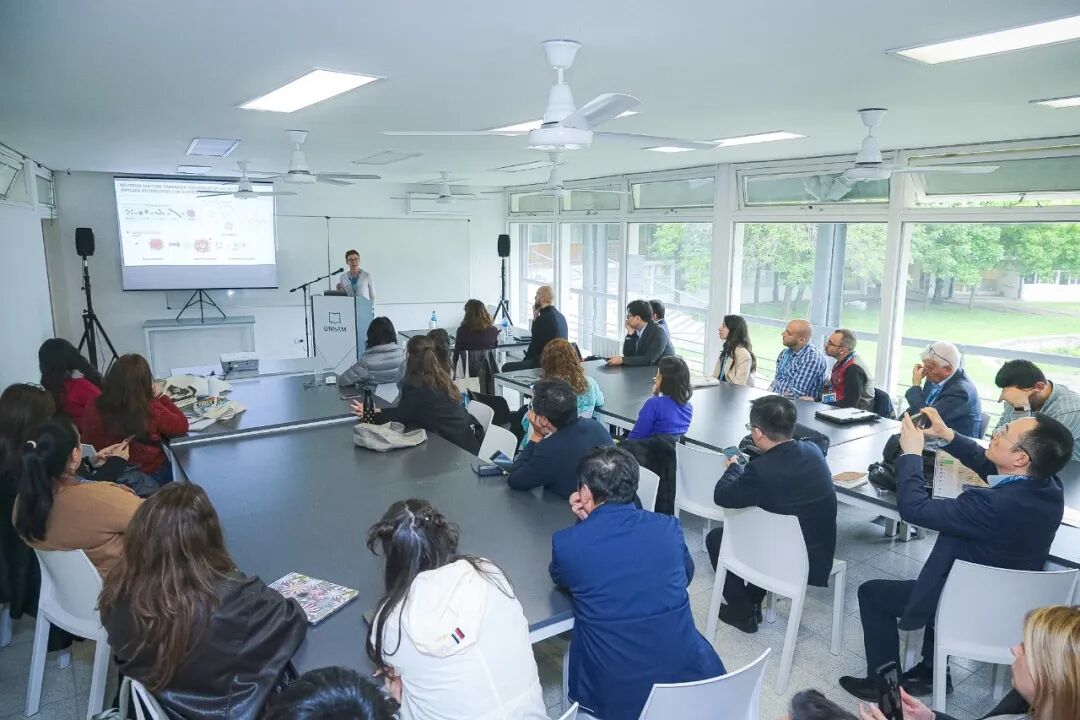
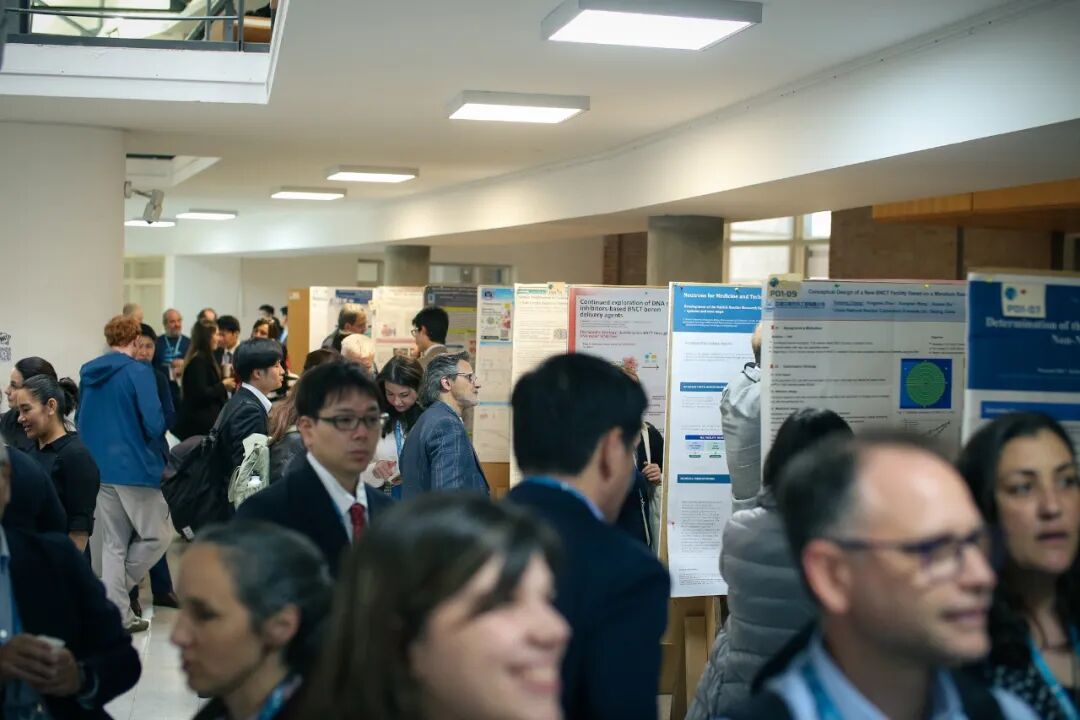
ICNCT is the oldest and most prestigious international academic conference in the BNCT field, held every two years since 1968. Over nearly six decades, the field has moved from the reactor era into the accelerator era, from a Japan-centered story to a globally distributed race. What new signals emerged at this congress?
Academia — latest progress across five frontiers:
1. Novel boron carriers and delivery systems:
Beyond mature BPA, PBC-IP, albumin-conjugated boron molecules, BODIPY theranostic boron probes, and convection-enhanced delivery (CED, bypassing the blood-brain barrier) emerged as hot topics — addressing the challenge of insufficient BPA brain penetration in glioblastoma and other brain tumors.
2. Radiobiology and immune effects:
BNCT-induced immunogenic cell death and extracellular vesicle markers continue to generate new data, providing a theoretical basis for combining BNCT with immunotherapy. Oral mucosal protection strategies are also being refined.
3. Dosimetry and bioequivalence conversion:
There is still no globally unified standard for BNCT bioequivalent dose conversion across different radiation types and models; new concepts such as B-NIT continue to be discussed.
4. Clinical cohorts and indication expansion:
Osaka presented long-term follow-up data on 285 head and neck cancer cases. Pediatric brain tumor and melanoma BNCT data were also published. Research on the correlation between glioblastoma surgical resection extent and BNCT prognosis provides further clinical evidence for BNCT as a post-surgical salvage treatment.
5. Boron imaging and in vivo boron quantification:
Because ¹⁸F-FBPA PET requires an on-site cyclotron due to fluorine-18's ~110-minute half-life, creating practical inconvenience for diagnosis and treatment, solid-state nuclear track detectors (SSNTD) and LA-ICP-MS quantification methods are advancing rapidly.
Industry — global device deployment is accelerating:
• Japan: The Kansai BNCT Medical Center has accumulated over 600 patient irradiations, with Osaka reporting 285 long-term follow-up cases — the world's deepest clinical dataset.
• Europe: Helsinki University Hospital in Finland launched Europe's first in-hospital accelerator-based BNCT clinical program in 2025, with Italy and Spain following.
• United States: The University of Wisconsin-Madison has entered the construction phase, and multiple accelerator companies have raised funding.
• South Korea: Accelerator-based BNCT projects are in progress.
• China: Multiple accelerator-based BNCT systems have entered clinical trials or regulatory review, with clinical exploration underway across hospitals in East and South China.
A consensus is forming: BNCT is no longer "Japan's story" but a globally dispersed field — and China is moving from follower to the next center stage.
3.Why China?
The next congress is coming to China for a reason. Over the past few years, China has been catching up rapidly across the entire BNCT value chain — from accelerator equipment to boron drug development, from clinical deployment to academic output — not just following in one niche:
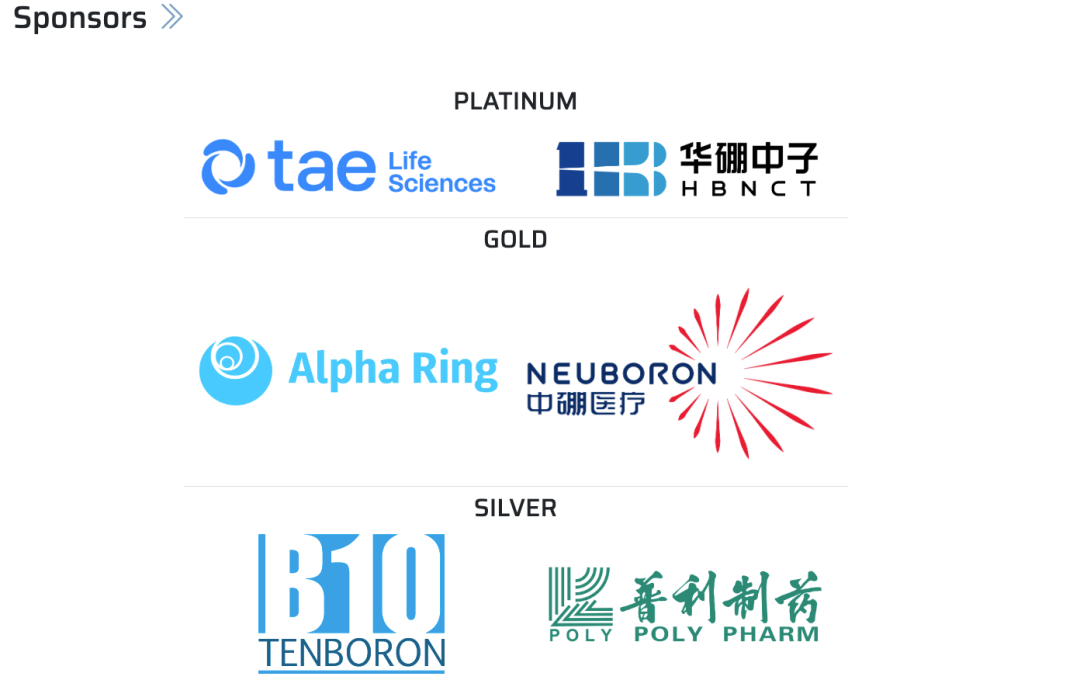
Guoke Neutron: Built on the China Spallation Neutron Source at the Institute of High Energy Physics (CAS) in Dongguan, Songshan Lake — described by CCTV as a "super microscope" for exploring the micro-world — China's first domestically developed accelerator-based BNCT system with full intellectual property rights is now operational, first installed at Dongguan People's Hospital. The system uses a 2.78 MeV radio-frequency quadrupole accelerator with a rotating lithium target, delivering an epithermal neutron flux of ≥1.02×10⁹ n/s/cm². In 2024, system availability exceeded 95%.
Poly Pharm: The BPA boron drug, developed in partnership with Guoke Neutron, is being used in clinical research led by Dr. Liu Zhigang's team at the Dongguan People's Hospital Oncology Center. Phase I completed 21 recurrent head and neck patients; Phase II is now underway.
HBNCT: Built around a "lithium target + BSA" compact accelerator paired with self-produced boronophenylalanine, forming a closed loop of "equipment + drug." Epithermal neutron flux of 1.2×10⁹ n/cm²/s, proton energy 2.8 MeV, beam current ≥30 mA, treatment depth ≤11 cm, compliant with IEC 60601-2-93. Received NMPA clinical trial approval (IND) in March 2026, now entering Phase I.
Neuboron: First installed at Xiamen Humanity Hospital, having completed Phase I in recurrent head and neck cancer and initiated Phase II; system availability has exceeded 99% since November 2024. Self-developed NeuMANTA/COMPASS treatment planning system.
FDS (Fenglinhe): Built around the TopMC Monte Carlo engine, China's first dedicated neutron treatment planning system N-TPS, with dose engine deviation <3% (better than the IAEA's 7% recommendation) and AI-assisted planning completed within 10 seconds. Five bases across Chongqing, Qingdao, Nanjing, Anqing, and Hefei, covering the full spectrum of photon/electron, proton, and BNCT radiotherapy equipment.
Additionally, BNCT centers are under construction or already signed in Shandong, Zhejiang, Sichuan, and other provinces. The Hainan Boao Lecheng International Medical Tourism Pilot Zone has introduced a Japanese BNCT project. As of now, China has 4 centers in clinical trials, 3 in installation/commissioning, and 7 under construction or signed.
Beyond hardware, Chinese academic research is also advancing on multiple fronts.
Nanjing University presented a physics-constrained machine learning algorithm for real-time online neutron spectrum reconstruction in accelerator-based BNCT. Professor Liu Zhibo's team at Peking University continues to publish on novel boron drug molecular design, with a dual-boron amino acid molecule featuring both PET imaging and BNCT therapeutic potential published in Angewandte Chemie. The Second Affiliated Hospital of Zhejiang University School of Medicine conducts systematic research on boron delivery agent development, microdosimetry, and treatment planning optimization. The Institute of Nuclear Science and Technology at Nanjing University of Aeronautics and Astronautics has long collaborated with Italy's INFN and the University of Pavia on key accelerator BNCT technologies, with results selected among Jiangsu Province's top ten international industry-academia cooperation achievements.
4. But Is a Device Enough?
No.BNCT is a combination drug-device therapy — the neutron beam is the "gun," and the boron drug is the "bullet." Without the drug, even the most advanced accelerator is just an idling machine, unable to truly reach patients, unable to truly treat a single patient.
The boron drug determines three things:
1. How many patients can be treated: The higher the boron concentration in the tumor and the better the tumor-to-normal tissue (T/N) ratio, the larger the patient population that can benefit.
2. What cancers can be treated: Different boron drugs target different tumor types — BPA for head and neck cancer, novel boron drugs that can extend to breast cancer, osteosarcoma, pancreatic cancer, brain tumors.
3. Treatment accessibility: Whether the drug is locally approved, whether it can be supplied with stable GMP quality, and whether the price is affordable — these directly determine whether a device can truly serve patients.
The boundary that boron drugs can reach defines the clinical boundary of BNCT therapy.
Currently, only one BNCT drug is approved worldwide — borofalan (Steboronine) from Stella Pharma in Japan, available only domestically. Every new device entering clinical practice requires a locally approved, GMP-compliant boron drug supply.
This is why, as global BNCT device deployment accelerates, the boron drug side is becoming the most critical link in the entire industry chain.
5. What has Poly Pharm done in this field?
The first boron drug: BPA — a fully integrated chain from raw material to clinical supply
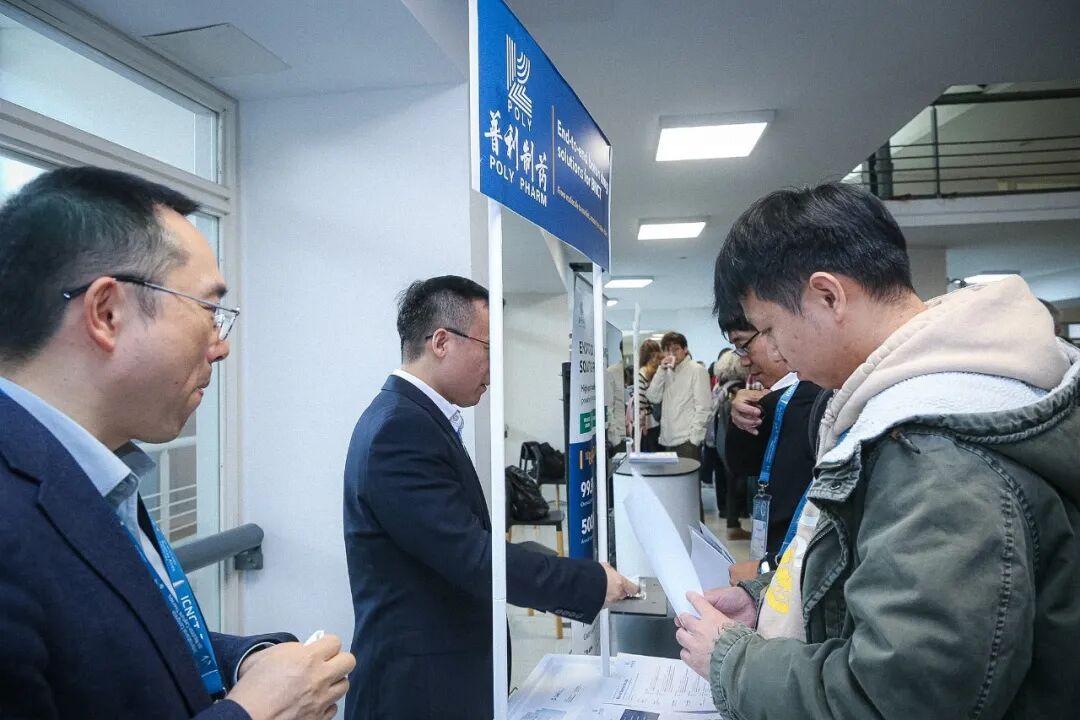
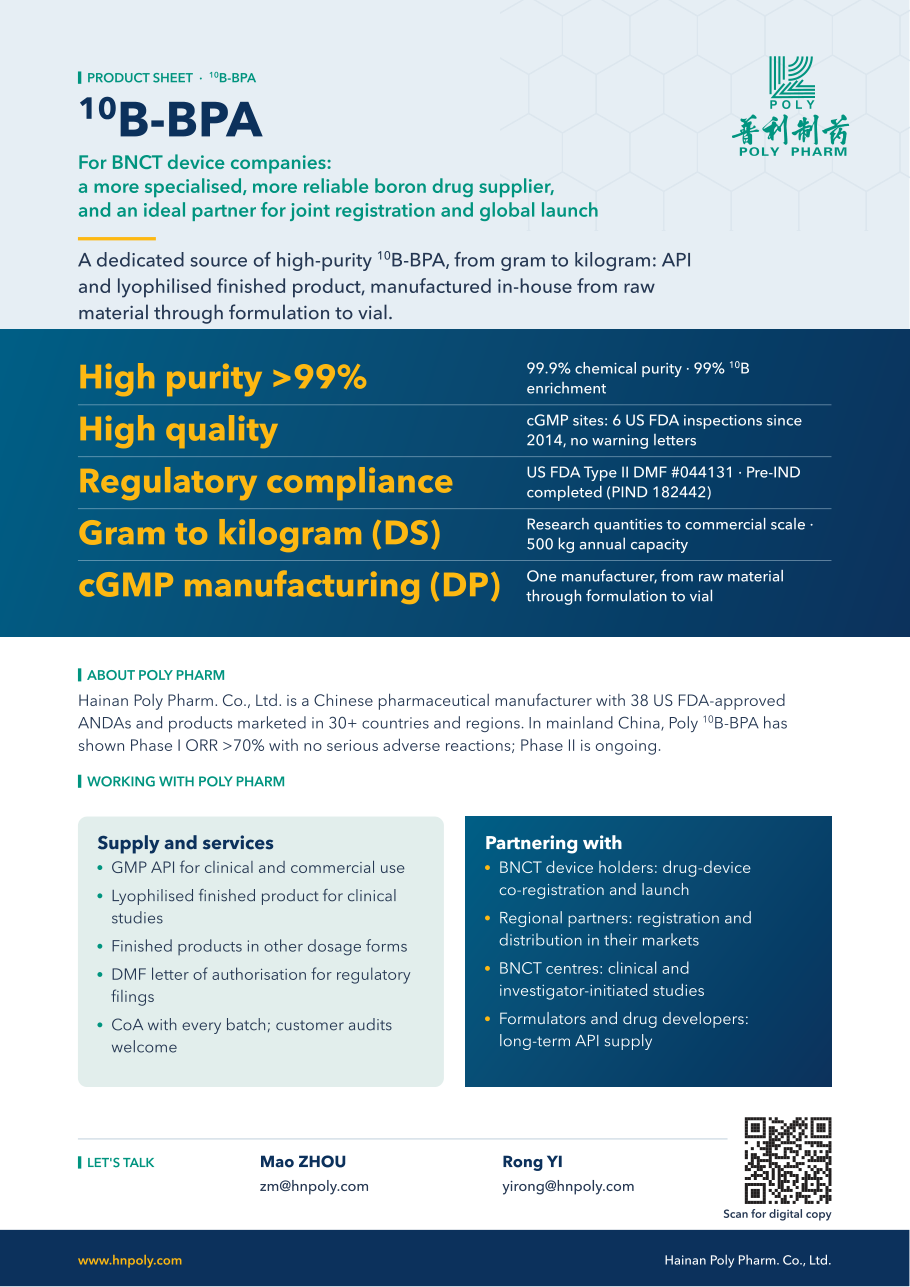
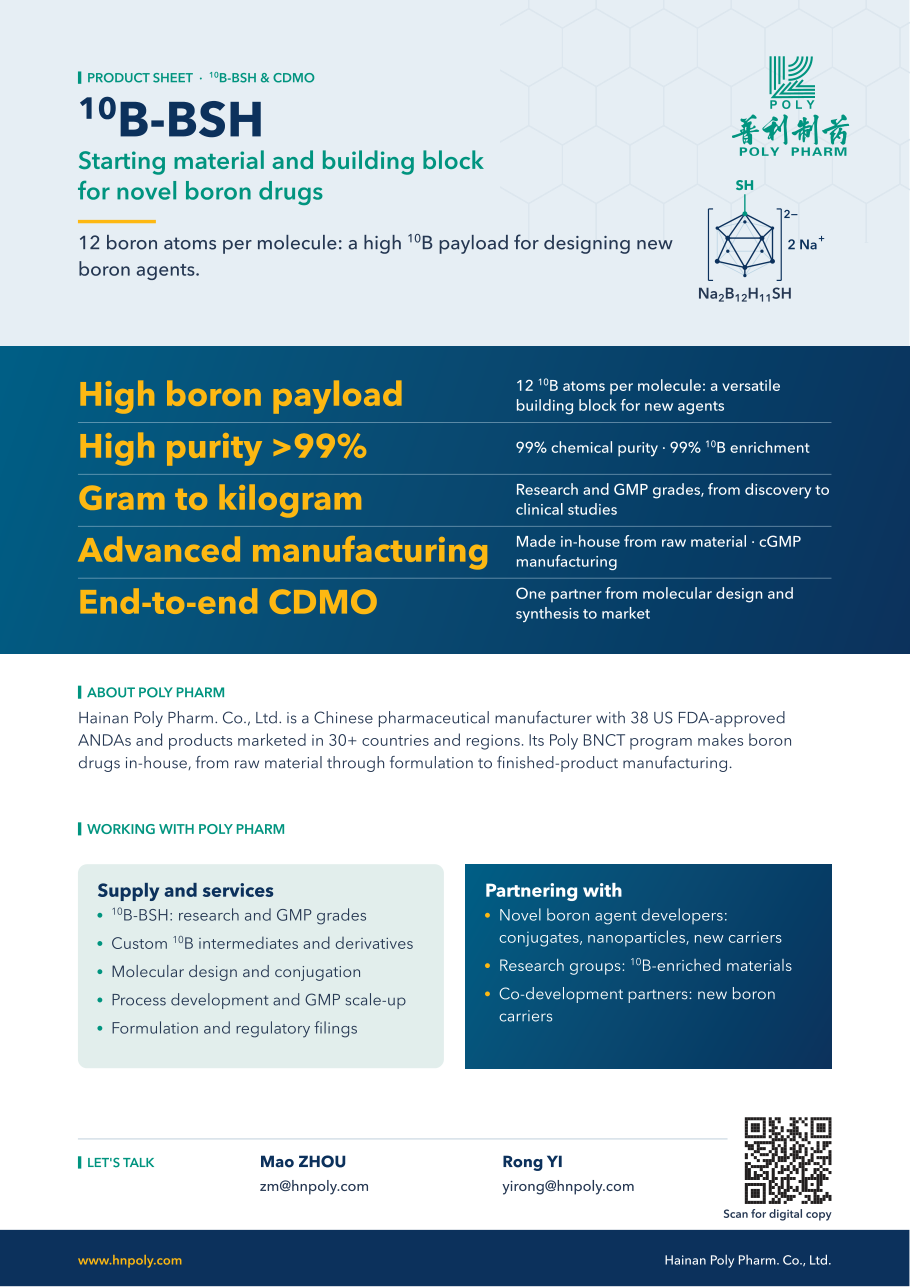
¹⁰B-BPA: Now in Phase II clinical trials. 99.9% chemical purity, 99% ¹⁰B enrichment — from raw material to formulation to finished product, all produced in-house. The API has been filed with the US FDA as a Type II Drug Master File (DMF), and FDA pre-IND interactions have been completed. In China, Phase I clinical trials have been completed and Phase II is ongoing. We supply research-grade and GMP-grade API, lyophilized powder for injection, and other finished dosage forms, from gram to kilogram scale, with DMF authorization letters available.
Next-generation pipeline: from BPA to multiple novel boron drugs and multiple indications
BPA is only the starting point. Our R&D pipeline includes 5+ novel boron drug programs:
• Small molecule (Breast cancer): PCC confirmed; cellular uptake 2–3× that of BPA; ~90% clonogenic inhibition rate; potential for breast-conserving treatment. IND preparation underway.
• Small molecule (Osteosarcoma, orphan disease): Preclinical stage; meets orphan drug criteria in the US, EU, and Japan; T/N ratio of 18.4; potential for limb-sparing treatment.
• Small molecule (Pancreatic cancer): Dual metabolic targeting for higher tumor enrichment. Preclinical research expected to complete by 2027. Potential value: offering pancreatic cancer patients an alternative to pancreatic resection — a highly complex surgery that places extreme demands on surgical expertise.
• Small molecule (Prostate cancer): Dual metabolic targeting for higher tumor enrichment. Preclinical research expected to complete by 2027. Potential value: avoiding radical prostatectomy and its high risk of urinary incontinence.
• BDC Antibody-boron conjugate (Breast cancer, Lung cancer): Preclinical stage. 1,200 boron atoms per molecule, targeting HER2/HER1 — opening a new direction for precision boron drugs.Shared goal: precisely destroy tumors, preserve organs, and improve quality of life for patients.
The value of a boron drug pipeline is not just "one accelerator, different drugs, different cancers" — it is about: maximizing device utilization so every accelerator serves more patients; meeting unmet clinical needs; and bringing BNCT therapy from China to the world, to benefit more patients.
6. Benefiting the World, Advancing Health
Poly Pharm's corporate mission is eight words: Benefiting the World, Advancing Health (普惠天下 · 利泽健康).
This is not just about making BNCT accessible to Chinese patients — it is about bringing this therapy to more places around the world. That is why we are filing with the US FDA and engaging with hospitals and industry partners globally.
BNCT is an ecosystem that must be built together: device makers build the gun, scientists research the bullets and mechanisms, drug companies build the bullets, doctors and hospitals provide the clinicaltreatment means, regulators establish standards, and investors provide the fuel. No single party can build this alone.
In this ecosystem, Poly Pharm is the partner that builds the bullets — from concept design to PCC, from PCC to clinical development, regulatory filing, manufacturing, and globalization; the full drug chain, fully enabled. Device makers build the gun; we supply the bullets.
With an open mind, we are ready for collaboration across the board:• With device holders: explore overseas regional combined drug-device registration.
• With hospitals: conduct clinical research and joint grant applications.
• If you are a drug scientist: we welcome joint research to translate academic discovery into reality.
• If you are an investor: we invite you to join us in building this industry together.
Forging boron as a blade, advancing toward the tumor.
See you in China, 2028.
Contacts:
Mr. Zhou | zm@hnpoly.com
Ms. Yi | yirong@hnpoly.com
Ms. Ling (HR) | hnpolyhr@hnpoly.com
Disclaimer&Forward-Looking Statement:
This article provides industry information for medical and life sciences professionals. The boron drugs discussed are still in clinical or preclinical research stages and have not been approved for marketing in mainland of China. This article does not constitute any medical or treatment advice. Whether a treatment is suitable or whether a clinical trial can be joined should be discussed with the treating physician.